

Ball Valves
Forged Brass Ball Valves Built for Wholesale Volume
SOVAL's leaded brass ball valves are forged, not cast, giving distributors a heavier-duty valve body for industrial, HVAC, and fuel gas lines where potable water contact isn't a factor. Every forged brass ball valve in this line ships with a chrome-plated ball and stem, a quarter-turn lever handle, and threaded or flare connections built to standard ANSI dimensions. Because leaded brass costs less to produce than lead-free alloys, this line gives wholesale buyers a lower per-unit cost on jobs where code doesn't require NSF/ANSI 61 compliance.
Leaded Brass Ball Valve Specifications
| Feature | Specification |
|---|---|
| Body Material | Forged leaded brass, heavy-duty construction |
| Ball & Stem | Chrome-plated brass for smooth quarter-turn operation |
| Handle | Quarter-turn lever handle, steel handle option on select series |
| Port Design | Full port (609 Series) or standard/reduced port (610 Series) for max flow with minimal pressure drop |
| End Connections | FIP x FIP, FIP x Flare, or 1-piece FIP x FIP with safety stop |
| Pressure Rating | 400 WOG (610 Series) up to 600 WOG on full port series |
| Potable Water Use | Not approved for potable water applications in the United States |
| Best-Fit Applications | Compressed air, hydraulic, fuel oil, HVAC, and industrial process lines |
Where Leaded Brass Ball Valves Fit in the Field
Leaded brass ball valves are not approved for potable water use in the United States, so they're stocked for applications where that restriction doesn't apply: compressed air lines, hydraulic systems, fuel oil, HVAC loops, and industrial process lines. Distributors serving contractors outside the residential plumbing and drinking water space can spec this line at a lower cost than the lead-free equivalent without sacrificing pressure rating or port performance.
Leaded Brass Ball Valve FAQs
A leaded brass ball valve uses a standard copper-zinc brass alloy with a small percentage of lead added to improve machinability and casting or forging performance. It offers the same quarter-turn shutoff as a lead-free valve, but it is not approved for use in U.S. potable water systems.
Lead-free brass ball valves are manufactured to stay under the federal 0.25% weighted-average lead limit for wetted surfaces, making it legal for drinking water contact. Leaded brass exceeds that threshold, so it's reserved for non-potable applications like compressed air, hydraulic lines, and fuel oil, typically at a lower per-unit cost than the lead-free equivalent.
Forging shapes the brass body under high pressure while the metal is solid, which compresses the grain structure and produces a denser, stronger valve body than casting. A forged brass ball valve typically holds up better under pressure cycling and physical stress on the line than a cast equivalent.
No. Under the U.S. Safe Drinking Water Act, valves used in systems that supply water for human consumption must meet a 0.25% weighted-average lead content limit. Leaded brass ball valves exceed that limit and are intended for non-potable applications only.
SOVAL's leaded brass ball valves are rated between 400 and 600 WOG (Water, Oil, Gas) depending on series and port style, giving distributors a valve suited to industrial and mechanical lines that run well above standard residential water pressure.
Yes. SOVAL stocks forged brass ball valves for wholesale distribution with volume pricing and same-day shipping on the majority of orders. Contact our sales team for current pricing tiers and minimum order quantities.
Source Forged Brass Ball Valves From Soval
Soval stocks leaded brass ball valves in full port and reduced port configurations, forged for the industrial, HVAC, and fuel gas lines where lead-free isn't required. Contact our team for volume pricing, spec sheets, or help matching a series to your customer's application.
Contact Us-
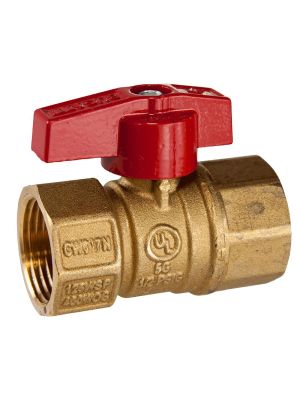
![]() 609-9660 Series - Forged Brass Ball Valve, 2 Piece Body, FxF, Lever Handle
http://www.soval.com/bullets/9660.doc
Learn More -
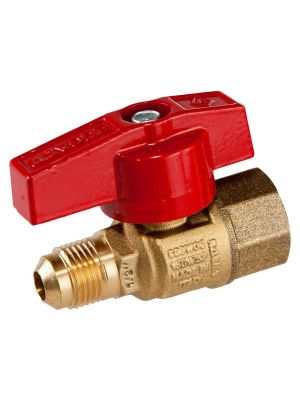
![]() 609-9665 Series - Forged Brass Ball Valve, 2 Piece Body, FxFlare, Lever Handle
http://www.soval.com/bullets/9665.doc
Learn More -
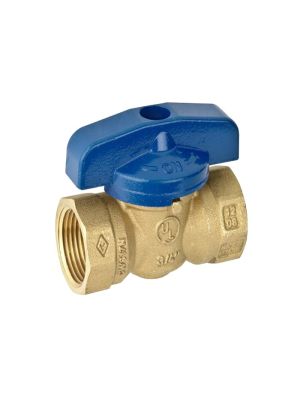
![]() 609-9681SL - Series - Forged Brass Ball Valve, 1 Piece Body, FxF, Lever Handle, Safety Stop
http://www.soval.com/bullets/9681ss.doc
Learn More -
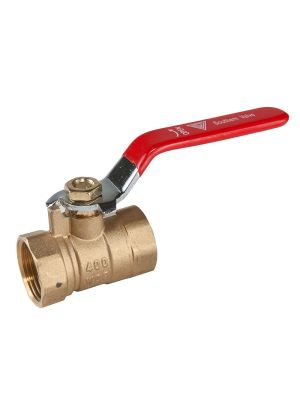
![]() 610 Series - Brass Reduced Port Threaded Ball Valves
Features:
- Threaded
- Heavy Duty Forged Brass
- Standard Port, Max Flow, Minimal Pressure Drop
- Quarter Turn Lever Handle
- Chrome Plated Brass Ball & Stem
- Not for Potable Water in USA
- 400 WOG